
VIP member
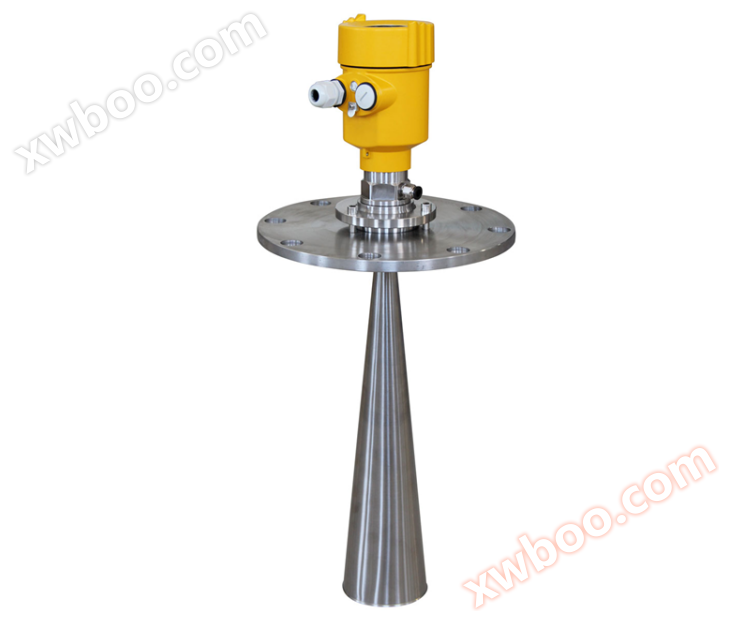
XMRD904/905 26G Radar Level Gauge
1、 Product Overview: The 904/905 sensor is a 26G high-frequency radar level measuring instrument. The antenna has been further optimized and processed
Product details
 one、Product Overview
904/905The sensor is26GHigh frequency radar based level measuring instrument, with further optimized antenna processing, and a new fast microprocessor capable of high-speed signal analysis and processing, making the instrument suitable for use in reaction vesselsComplex measurement conditions such as solid material silos.
principle
The radar level antenna emits narrow microwave pulses, which are transmitted downwards through the antenna. After the microwave comes into contact with the surface of the measured medium, it is reflected back and received again by the antenna system. The signal is transmitted to the electronic circuit part and automatically converted into a level signal (because microwave propagation speed is extremely fast, the time it takes for electromagnetic waves to reach the target and reflect back to the receiver is almost instantaneous).

The reference surface for measurement is the bottom surface of the thread or the sealing surface of the flange.
Note: When using radar level timing, it is important to ensure that the highest level does not enter the measurement blind zone (as shown in the figure)DThe area shown.
26GRadar level gaugefeature:
lSmall antenna size, easy to install; Non contact radar, no wear and tear, no pollution.
lAlmost not affected by corrosion and foam; Almost unaffected by changes in water vapor, temperature, and pressure in the atmosphere.
lThe severe dust environment has little impact on the operation of high-frequency level meters.
lShorter wavelength, better reflection on tilted solid surfaces.
lThe small beam angle and concentrated energy enhance the echo capability while also helping to avoid interference.
lThe measurement blind spot is smaller, and it can also achieve good results for measuring small cans.
lHigh signal-to-noise ratio enables better performance even in fluctuating conditions.
lHigh frequency is the best choice for measuring solids and low dielectric constant media.
twoIntroduction to Instruments

Online inquiry
-
Contacts
-
Company
-
Telephone
-
Email
-
WeChat
-
Verification Code
-
Message Content
-