
VIP member
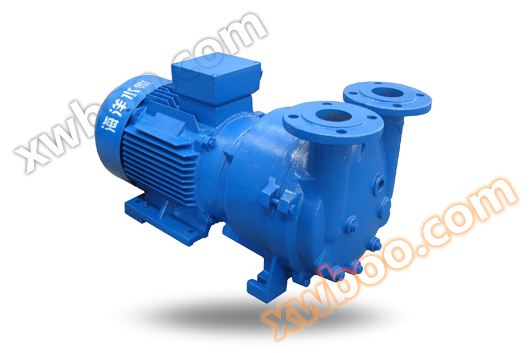
SKA (2BV) water ring vacuum pump
SKA (2BV) water ring vacuum pump is suitable for extracting gases and water vapor. The suction pressure can reach 33mbar absolute pressure (97% vacuum
Product details
Purpose and scope of use
SKA (2BV) water ring vacuum pump is suitable for extracting gases and water vapor. The suction pressure can reach 33mbar absolute pressure (97% vacuum degree). When the vacuum pump works for a long time with a suction pressure below 80mbar, a cavitation protection tube should be connected to protect the pump. If equipped with an atmospheric injector (see attached table), the suction pressure can reach 10mbar, and the injector can be directly installed on the vacuum pump. When used as a compressor, its pressure reaches 0.26mbar (absolute pressure).
The SKA (2BV) water ring vacuum pump is a single-stage pump with an integral structure and coaxial pump. The shaft seal adopts mechanical seal, which has the characteristics of simple structure, easy installation, oil-free, safe and reliable.
working principle
1. The coaxial direct connection design of the pump saves space and is easy to install;
2. Using mechanical seals as standard configuration eliminates leaks and makes maintenance easy;
3. Smooth operation, with noise levels as low as 62 decibels;
4. Unified corrosion-resistant design, bronze impeller improves the corrosion resistance of the pump, while stainless steel material is more suitable for more demanding applications;
5. The unique flexible exhaust port design prevents over compression, ensuring that - TSKA operates efficiently within its performance range.
working principle
| The SKA (2BV) water ring vacuum pump, as shown in Figure (1), has impeller 3 eccentrically installed inside the pump body. When starting, a certain height of water is injected into the pump. Therefore, when impeller 3 rotates, water is subjected to centrifugal force and forms a rotating water ring 1 on the inner wall of the pump body. The lower inner surface of the water ring is tangent to the hub and rotates in the direction of the arrow. During the first half of the rotation process, the inner surface of the water ring of the SKA water ring vacuum pump gradually separates from the hub, forming a closed space between the impeller blades and the water ring. As the impeller rotates, this space gradually expands, and the gas pressure in the space decreases. Gas is sucked in from the disc suction port; During the latter half of the rotation, the inner surface of the water ring gradually approaches the hub, and the space between the blades gradually shrinks. The gas pressure in the space increases, and when it exceeds the pressure at the exhaust port, the gas between the blades is discharged from the disc exhaust port. In this way, every time the impeller rotates, the space between the blades sucks and exhausts once, and many spaces work continuously. The SKA water ring vacuum pump continuously sucks or compresses gas. The SKA (2BV) water ring vacuum pump generates heat during operation, which causes the working water ring to generate heat. At the same time, some water and gas are discharged together. Therefore, during operation, it is necessary to continuously supply water to the pump to cool and replenish the water consumed inside the pump, in order to meet the working requirements of the pump. When the gas discharged from the SKA (2BV) water ring vacuum pump is no longer used, a gas water separator is connected to the exhaust port of the SKA water ring vacuum pump. After the exhaust gas and some of the carried water are discharged into the gas water separator, the gas is separated and the gas is discharged through the exhaust pipe. The remaining water is supplied to the pump through the return pipe for continued use. With the extension of working hours, the temperature of the working water will continue to rise. At this time, cold water needs to be supplied from the water supply pipe to reduce the temperature of the working water and ensure that the pump can meet the required technical requirements and performance indicators. When the SKA water ring vacuum pump is used as a compressor, the pump exhaust port is connected to a gas water separator. The gas water mixture enters the gas water separator and is automatically separated. The gas is transported to the required system through the exhaust pipe, and the working water enters the SKA (2BV) water ring vacuum pump through the separator. When compressing gas, the working water is extremely hot, and the water is discharged from the pump exhaust port, causing the temperature to increase. Cold water needs to be continuously supplied from the water supply pipe to replenish the released water and also serve as a cooling effect, so that the working water temperature does not become too high, thereby ensuring the performance of the compressor, meeting technical specifications, and meeting process requirements. |
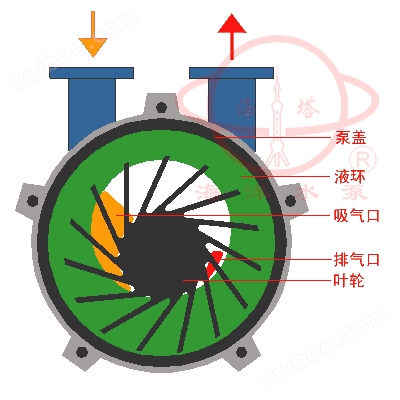 |
Figure 1 Working principle diagram of water ring vacuum pump and compressor |
Main application areas
vacuum filtration |
Chemical filtration plant/chemical processing plant/iron ore plant Mining industry/phosphate fertilizer plant/paper mill/poultry processing plant/coal preparation plant |
Steam recovery |
(Distiller, loading and unloading station) |
Water pump intake |
(Waterworks) |
||
Condenser water tank replenishment |
(Power Station) |
||
vacuum distillation |
Milk factory, food factory, chemical factory, pulp mill |
dry |
(Chemical and pharmaceutical manufacturing industry) |
Vacuum disinfection |
Hospitals, medical rooms, laboratories |
Wood treatment/drying |
|
extrusion molding |
plastic industry |
Medical/Laboratory Vacuum |
|
forming |
Manufacturing industries such as plastics, polyethylene, rubber, tires, etc |
solvent recovery |
|
impregnation |
Food processing, wood processing, textile factories, plywood factories, manufacturing of utility poles, etc |
Soil purification |
|
vacuum packaging |
|||
Liquid degassing |
Food processing, water softening, bottling plant |
extraction |
|
Compressed air regeneration |
Pulp, steel, automotive, glass, chemical industry |
tan |
|
food processing |
Food processing factory, dairy factory |
canned |
technical specifications
model |
old model |
magnanimity (m3/min) |
ultimate vacuum (MPa) |
Motor power (kw) |
Pump speed (R.P.m) |
Working fluid flow rate (L/min) |
noise (A) |
weight (kg) |
SKA20.60 |
2BV-2060 |
0.45 |
0.097 |
0.81 |
2880 |
2 |
62 |
37 |
SKA20.61 |
2BV-2061 |
0.86 |
0.097 |
1.45 |
2880 |
2 |
65 |
41 |
SKA20.70 |
2BV-2070 |
1.33 |
0.097 |
2.35 |
2850 |
2.5 |
66 |
66 |
SKA20.71 |
2BV-2071 |
1.83 |
0.097 |
3.85 |
2860 |
4.2 |
72 |
85 |
SKA5110 |
2BV-5110 |
2.75 |
0.097 |
4 |
1450 |
6.7 |
63 |
120 |
SKA5111 |
2BV-5111 |
3.83 |
0.097 |
5.5 |
1450 |
8.3 |
68 |
150 |
SKA5121 |
2BV-5121 |
4.66 |
0.097 |
7.5 |
1450 |
10 |
69 |
210 |
SKA5131 |
2BV-5131 |
6.66 |
0.097 |
11 |
1430 |
15 |
73 |
280 |
SKA5161 |
2BV-5161 |
8.33 |
0.097 |
15 |
970 |
20 |
74 |
390 |
| Note: 1. The data listed in the table were measured under the following technical conditions: ① Atmospheric pressure 101325Pa (1013mbar) ② Inlet water temperature 15 ℃ ③ Inhalation air temperature 20 ℃ ④ Air relative humidity 70% 2. Performance allowable deviation ± 10% |
||||||||
Start and Stop
1. Start the water ring vacuum pump
Before starting the SKA (2BV) water ring vacuum pump that has been parked for a long time, it must be manually rotated several times to confirm that there is no jamming or other damage inside the water ring vacuum pump.
The SKA (2BV) water ring vacuum pump should be started in the following order (see Figure 5)
(1) Open the exhaust valve.
(2) Start the motor (pay attention to the forward and reverse rotation of the motor)
(3) Quickly open water supply pipe 2 in Figure 5. Gradually increase the water supply until it meets the specified requirements (be careful not to run the vacuum pump dry).
2. Shutdown of water ring vacuum pump
The parking sequence for SKA (2BV) water ring vacuum pump is as follows:
(1) If there is a valve in the intake pipe, close the valve on the intake pipe.
(2) Close water supply pipe 2 and quickly shut down the vacuum pump.
(3) After parking, the water in the pump chamber should be drained to avoid blade and pump shaft breakage when starting again.
maintenance
1. To avoid wear and tear on the impeller, pump body, or jamming of the impeller, dust particles that enter the pump chamber with gas and working fluid can be washed away through the flushing port at the bottom of the SKA (2BV) water ring vacuum pump.
2. If hard water is used as the working fluid, it must be softened or the pump must be cleaned with a solution within a certain period of time.
3. The bearings of SKA (2BV) water ring vacuum pump motor are often operated at a temperature 15 ℃~20 ℃ higher than the surrounding temperature, and are not allowed to exceed 55 ℃~60 ℃. The bearings that work normally should be oiled 1-2 times a year, cleaned at least once a year, and all lubricating oil should be replaced.
4. If the mechanical seal used in SKA (2BV) water ring vacuum pump leaks, the dynamic and static rings of the mechanical seal should be checked for damage or aging of the sealing ring. If the above situation occurs, new parts need to be replaced.
Equipment installation
1. Installation of water ring vacuum pump:
When installing SKA (2BV) water ring vacuum pump and compressor, the installation surface must be horizontal and securely fastened with bolts through the bottom corner holes. To prevent welding slag from entering the vacuum pump during installation, a filter screen should be installed on the suction pipe.
2. Installation of air-water separator for water ring vacuum pump
The SKA (2BV) water ring vacuum pump air-water separator can be directly installed on the exhaust port of the water ring vacuum pump and securely fixed with bolts. The air-water separator has a pipeline connected to the pump, which supplies the water required for the operation of the water ring vacuum pump. The remaining working water is supplied by the water supply pipeline, and the water supply volume is adjusted by the valve on the pipeline.
The intake pipe of SKA (2BV) water ring vacuum pump or compressor should be equipped with a check valve to prevent water in the vacuum pump or compressor from returning to the system under the pressure of the exhaust pipe during parking.
Fault analysis and troubleshooting methods
Fault phenomenon of water ring vacuum pump |
Possible reasons for water ring vacuum pump |
Exclusion method of water ring vacuum pump |
The vacuum pump motor does not start; no sound |
Two power cords are broken |
check wiring |
The motor does not start; There is a buzzing sound |
One wire is broken, causing the motor rotor to stall Impeller malfunction Motor bearing failure |
If necessary, empty the cleaning pump and correct the impeller clearance Replace the impeller Replace bearings |
When the motor starts, the current circuit breaker trips |
winding short-circuit Motor overload Exhaust pressure too high Excessive working fluid |
Check the motor winding Reduce the flow rate of the working fluid Reduce exhaust pressure Reduce working fluid |
High power consumption |
Produce sediment |
Clean and remove sediment |
Vacuum pump does not generate vacuum |
No working fluid Serious system leakage Wrong rotation direction |
Check the working fluid Repair the leakage area Replace two wires and change the direction of rotation |
The vacuum degree of the vacuum pump is too low |
The pump is too small The flow rate of the working fluid is too low The working fluid temperature is too high (<15 ℃) abrasion Mild system leakage seal leakage |
Use a larger pump Increase the flow rate of working fluid Cooling working fluid, increasing flow rate Replace parts Repair the leakage area Check the seal |
Sharp noise from vacuum pump |
Generate cavitation High flow rate of working fluid |
Connecting gas corrosion protection components Check the working fluid and reduce the flow rate |
Vacuum pump leakage |
The sealing gasket is damaged |
Check all sealing surfaces |
Online inquiry
-
Contacts
-
Company
-
Telephone
-
Email
-
WeChat
-
Verification Code
-
Message Content
-