
VIP member
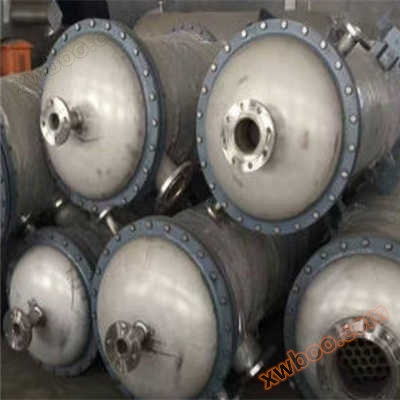
Processing customized condenser price
In fact, most custom-made condensers are exposed around the intersection of pipelines and corporate offices
Product details
In fact, most custom-made condensers are exposed around the intersection of pipelines and corporate offices. Generally, it is not possible to determine whether the damage to the pipeline is within the thickness range of the pipe plate or around any widened portion of the pipe plate. For such situations, a design scheme has been proposed for an exhaust valve cylinder clamp. Its characteristics are welding and fiber welding. One end of the sleeve has a small diameter, thin wall, and contains high energy inside. On the other end, the diameter is very large, the wall thickness is thick, and less critical components are added. Fiber welded metal materials and polymer materials are stacked on the surface layer of the customized condenser. The small end of the flexible waterproof sleeve of the spiral wound heat exchanger is placed into the tube at the tube plate, and the large end is placed into the arbitrary extension line of the tube. Once started, the small end of the flexible waterproof sleeve is placed in the pipeline at the pipe plate, and the large end is placed in any widened part of the pipeline. Once ignited and exploded, the small end of the soft and flexible waterproof sleeve will be firmly welded to the pipeline at the pipe plate based on strong mechanical kinetic energy. The large end of the flexible waterproof sleeve has only slight swelling and deformation, sticking only to the tube, and then being heated by a cylindrical resistor electric heater for fiber welding.
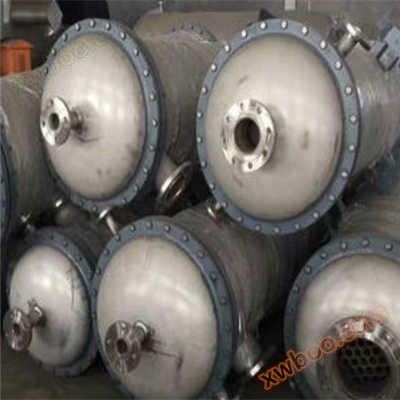
Maintenance and vertical inspection of customized condenser: Disassemble and assemble the stainless steel heads or tube boxes on both sides of the customized condenser, remove dirt from the tube side and inside the cover; Eliminate dirt and stains on the surface of pipelines and shells, and inspect the corrosion, rust, cracks, sand holes, and other defects on the end caps of condenser roller bearings and pipe boxes; Conduct pressure and exposure tests on discipline and shielding. Based on pressure testing, identify exposed pipelines and nozzles; Expand and repair the exposed riser, and use a conical plug to seal the exposed pipeline; Disassembly, replacement, and pressure testing of sealing gaskets for pipe boxes, rear cover plates, and trade connection flanges; Disassemble and assemble some basic screws and screw caps, and repair the insulation sleeve of the chassis; Check the fire resistance and corrosion resistance. Make precise measurements of thickness for a portion of the measurement; Inspect the prominent surface of the customized condenser for processing. There are no scratches, dents, or black spots on the surface. A way to improve the estimated heat dissipation effect of customized condensers for tubular heat exchangers. There are many types of customized condensers for tubular heat exchangers, which can be divided into different types, such as stainless steel tube shell customized condensers, fixed tube plate customized condensers, and multi tube process customized condensers.
Online inquiry
-
Contacts
-
Company
-
Telephone
-
Email
-
WeChat
-
Verification Code
-
Message Content
-