VIP member
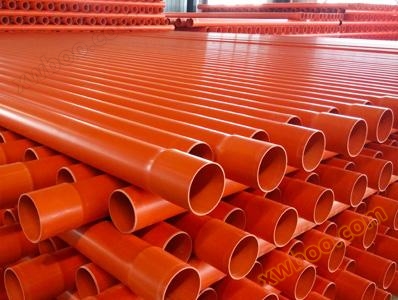
PVC-C high-voltage cable conduit
Product Features 1. Material Characteristics CPVC power pipes are mainly made of PVC-C resin with excellent heat resistance and insulation properties.
Product details
Product Features
-
1. Material characteristics
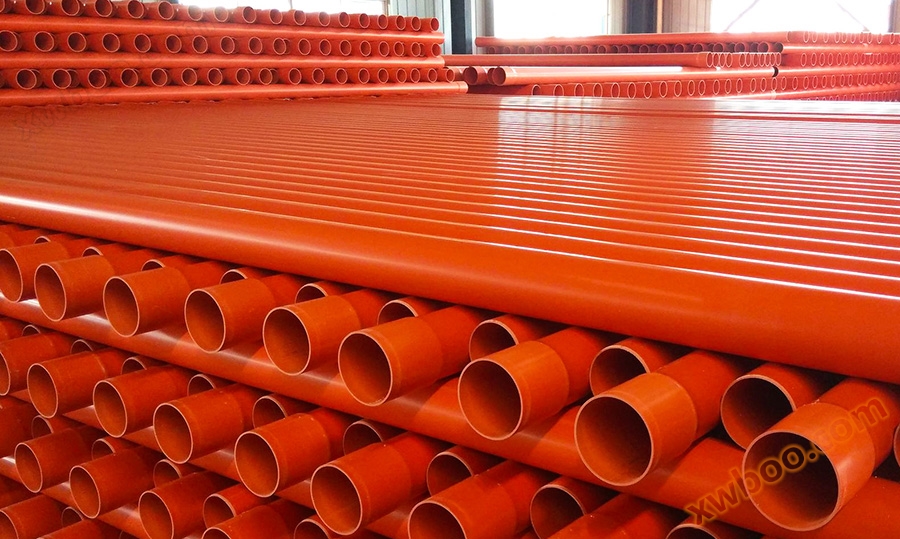
CPVC power pipes are mainly made of PVC-C resin, which has excellent heat resistance and insulation properties. CPVC products are currently recognized as green and environmentally friendly products, and their excellent physical and chemical properties are increasingly valued by the industry.
-
2. Heat resistance performance
CPVC power pipes have a heat resistance temperature increase of 15 ℃ compared to ordinary UPVC double wall corrugated pipes, and can maintain deformation in environments above 93 ℃ with sufficient strength.
-
3. Insulation performance
CPVC power conduit can withstand high voltage of over 30000 volts.
-
4. Compressive performance
CPVC power pipes have undergone material modification, resulting in a product ring stiffness of 10kpa, significantly higher than the national regulations for buried plastic pipes, which require a ring stiffness of 8kpa or higher.
-
5. High impact resistance
CPVC power conduit can withstand an impact force of 1kg weight and 2m height at a temperature of 0 ℃, fully reflecting the low-temperature impact performance of the material, which is fully applicable to the requirements of construction environment conditions.
-
6. Flame retardant performance
Both PVC and PVC-C materials have good flame retardant properties and can extinguish immediately upon ignition. Especially for PVC-C materials, due to their significantly higher chlorine content than PVC, their flame retardancy and smoke density index are significantly improved.
-
7. Installation performance
CPVC power pipes are lightweight, high-strength, and have a simple construction and laying method. They can be excavated and buried at night, backfilled on the road surface, and open to traffic as usual during the day; Adopting elastic sealing rubber ring socket connection, the installation and connection are convenient, fast, and have good sealing performance, which can prevent groundwater leakage and effectively protect the safety of power cable use.
-
8. Long service life
CPVC power protective sleeve material is corrosion resistant, anti-aging, and has a service life of more than 50 years.
Application field
-
-
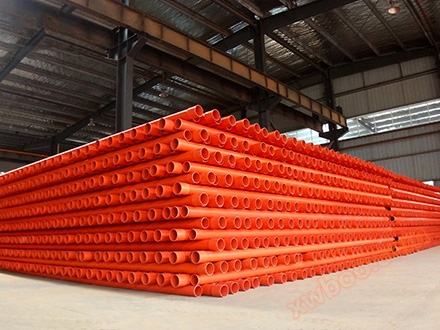
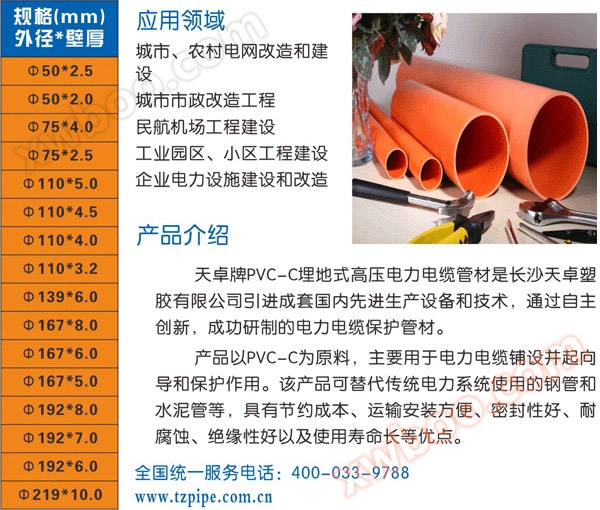
1. Urban and rural power grid renovation and construction
2. Urban municipal renovation project
3. Construction of industrial parks and residential communities
4. Construction and renovation of enterprise power facilities
5. Road lighting engineering street lamp cable conduit
Product Parameters
Installation Guide
-
PVC-C power pipe laying and installation
1. PVC-C power conduit standard fixed length (6 meters) pipe is equipped with 3 sets of pipe pillows, with a spacing of 2.0m between pillows and a distance of 0.5m from the joint.
2. The PVC-C power pipe can be manually installed, with ground personnel transferring the pipe material to the construction personnel at the bottom of the trench. It is strictly prohibited to roll the pipe into the groove edge.
3. The adjustment of the length of PVC-C power protective conduit can be done by cutting with mechanical tools. The cutting edge should be perpendicular to the axis of the pipe pillow and should be smooth and flat.
-
PVC-C power conduit connection
1. The connection of PVC-C power conduit adopts socket or interface connection.
2. The surface of PVC-C power conduit should be marked with the insertion length indication. After the pipe is inserted into the socket, it is necessary to confirm whether this insertion indication is accurate and in place.
3. Before connecting PVC-C power pipes, the soil or other attachments on the outside of the pipe socket and the inside of the rubber ring should be removed to facilitate the connection and prevent water leakage.
-
backfill soil
1. The backfilling of the trench should be carried out after the acceptance of the concealed engineering of the pipeline, and the filling should be done in a timely manner to prevent losses caused by prolonged exposure of the pipeline.
2. The area around PVC-C power conduit must be backfilled with soft soil.
3. Backfilling soil should be manually filled into the ditch, and mechanical backfilling is strictly prohibited.
3. The quality of backfill soil must meet the density requirements specified in the design.
Online inquiry
-
Contacts
-
Company
-
Telephone
-
Email
-
WeChat
-
Verification Code
-
Message Content
-