
VIP member
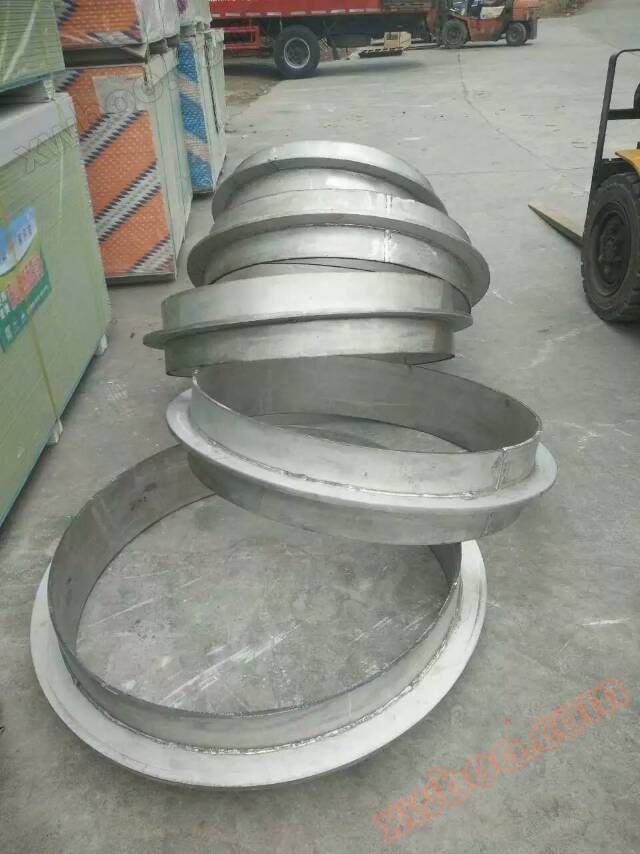
All stainless steel waterproof sleeve
The all stainless steel waterproof sleeve refers to a waterproof sleeve made of stainless steel, and the parameter standard is also the 02S404 waterpr
Product details
The all stainless steel waterproof sleeve refers to a waterproof sleeve made of stainless steel, and the parameter standard is also the 02S404 waterproof sleeve atlas. The difference from ordinary carbon steel waterproof sleeves is only in the material.
Stainless steel waterproof sleeves can be divided into two types: stainless steel rigid waterproof sleeves and stainless steel flexible waterproof sleeves. Rigid waterproof sleeves are pre embedded on the floor and roof of pipelines, which can effectively prevent floor leakage and are commonly used in building water supply and drainage engineering; The clean water tank and sewage tank of tap water, factory buildings, civil air defense engineering, and sewage treatment plants need pipelines to pass through cement walls and be able to move up and down. Therefore, flexible waterproof sleeves are required. When these two types of waterproof sleeves are used in contact with corrosive media, designers should choose suitable corrosion-resistant materials such as 316L stainless steel, 304 stainless steel, 201 stainless steel, etc. based on the properties of the media and anti-corrosion requirements.
Instructions for Stainless Steel Waterproof Sleeve
1. When the upstream face is a corrosive medium, sealing materials can be used to seal the gaps. The method is shown in the 02S404 national standard atlas "Installation Drawing of Flexible Waterproof Sleeve (Type B)";
2. If the casing passes through a non concrete wall, it should be partially replaced with a concrete wall. The pouring range should be 200 larger than the diameter of the wing ring (D5), and the casing must be poured and fixed in the wall at once;
3. The thickness of the concrete wall at the pipe penetration point should not be less than 300, otherwise one side or both sides of the wall should be thickened, and the diameter of the thickened part should be at least D5+200;
4. The weight of the casing is calculated as L=300. If the wall thickness is greater than 300, it should be calculated separately.
【 Steps to be noted when installing all stainless steel waterproof conduit 】
1. Pipe lowering: The pipe should be lowered to the bottom of the groove according to the technical requirements of the pipe, using mechanical pipe lowering method.
2. Cleaning the pipe mouth: All debris inside the socket should be removed and wiped clean, as any attachments may cause water leakage at the interface.
3. Cleaning and applying rubber rings: The adhesive on the rubber rings should be wiped clean, bent into a "plum blossom" or "8" shape, and inserted into the socket groove. Then, press the entire rubber ring with your hand or use a wooden hammer or rubber hammer to press it firmly, ensuring that all parts of the rubber ring are not warped or twisted, and are evenly and straight stuck in the groove.
4. Apply lubricant on the outer surface of the socket and the rubber ring: The lubricant can be vegetable oil. Apply the lubricant evenly on the inner surface of the rubber ring installed on the socket. When applying lubricant on the outer surface of the socket, brush all the socket parts outside the socket line evenly.
5. Push the pipe into the socket: During installation, first place the socket into the socket and press it onto the rubber ring inside the socket. Connect the steel wire rope and reverse chain, tighten the reverse chain, and at the same time, shake the pipe left and right with force at the socket end,. Until the socket is fully inserted into the socket. During installation, the axis line should be in a straight line to avoid the rubber ring protruding and affecting the installation.
6. The installation of waterproof conduit should be flat, and the pipes should be in a straight line. If there is an inclination, it should be laid from the lower part to the higher part, and the socket should be oriented towards the higher direction.
7. Installation of pipe fittings: Use a double chain parallel force method to ensure that the pipe fittings are installed in parallel.
8. At the end of the day's operation during laying construction, temporary end plates should be installed on the end pipes to prevent soil and sand from flowing into the waterproof casing.
9. After completing the interface assignment, before backfilling, avoid water accumulation in the trench to prevent the pipe from floating.
10. Inspection: Check if the position of the socket meets the requirements: Use a probe (or steel ruler) to insert into the gap between the socket and check if the position of the rubber ring is correct.
Online inquiry
-
Contacts
-
Company
-
Telephone
-
Email
-
WeChat
-
Verification Code
-
Message Content
-